


BYD Seal Accessories: Three Model Years, Three Different Mat Sets
Most cars get one floor mat moulding that lasts the whole model run. The BYD Seal has three. If you are shopping for a set and wondering why the same product name appears three times with different years attached, this is the explanation — and the two-minute check that tells you which one you need.
Three sets, three build-year windows
| Set | Fits build years | Coverage |
|---|---|---|
| Seal Family all-weather mats | 2023 onwards | Front and rear footwells |
| Seal Family all-weather mats | 2025 onwards | Front and rear footwells |
| Seal Family all-weather mats | 2026 onwards | Front and rear footwells |
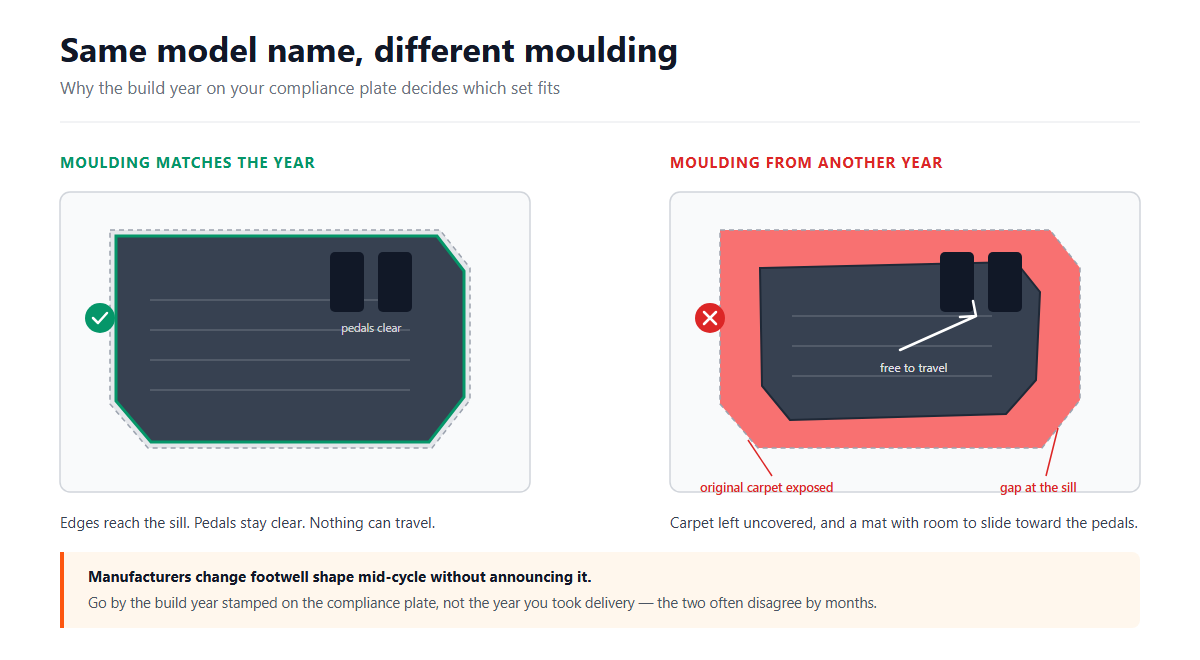
Same coverage, same construction, three different tools. They are not interchangeable, and a set from the wrong window will not simply be a looser fit — it will leave carpet exposed at the edges and have room to move.
Why the shape changed twice
Manufacturers revise floor pans mid-cycle far more often than buyers expect, and they rarely announce it. The changes that matter for a mat are small: a seat rail moved 15 mm, a different centre console foot, a revised sill trim, a new position for the floor anchor points. None of it makes the news. All of it changes where a moulded edge has to sit.
The Seal has been through two of these revisions since launch. That is why three tools exist rather than one.
Working out which one you need
Check the compliance plate, not your memory of when you bought it. The build date stamped there is what the moulding follows. Cars built late in a year are frequently delivered the following year, and a car you think of as a 2025 may well have been built in 2024.
The plate is usually on the driver's door jamb or under the bonnet. It gives month and year of manufacture. That year is the one to shop with.
They look the same in photos, and that matters
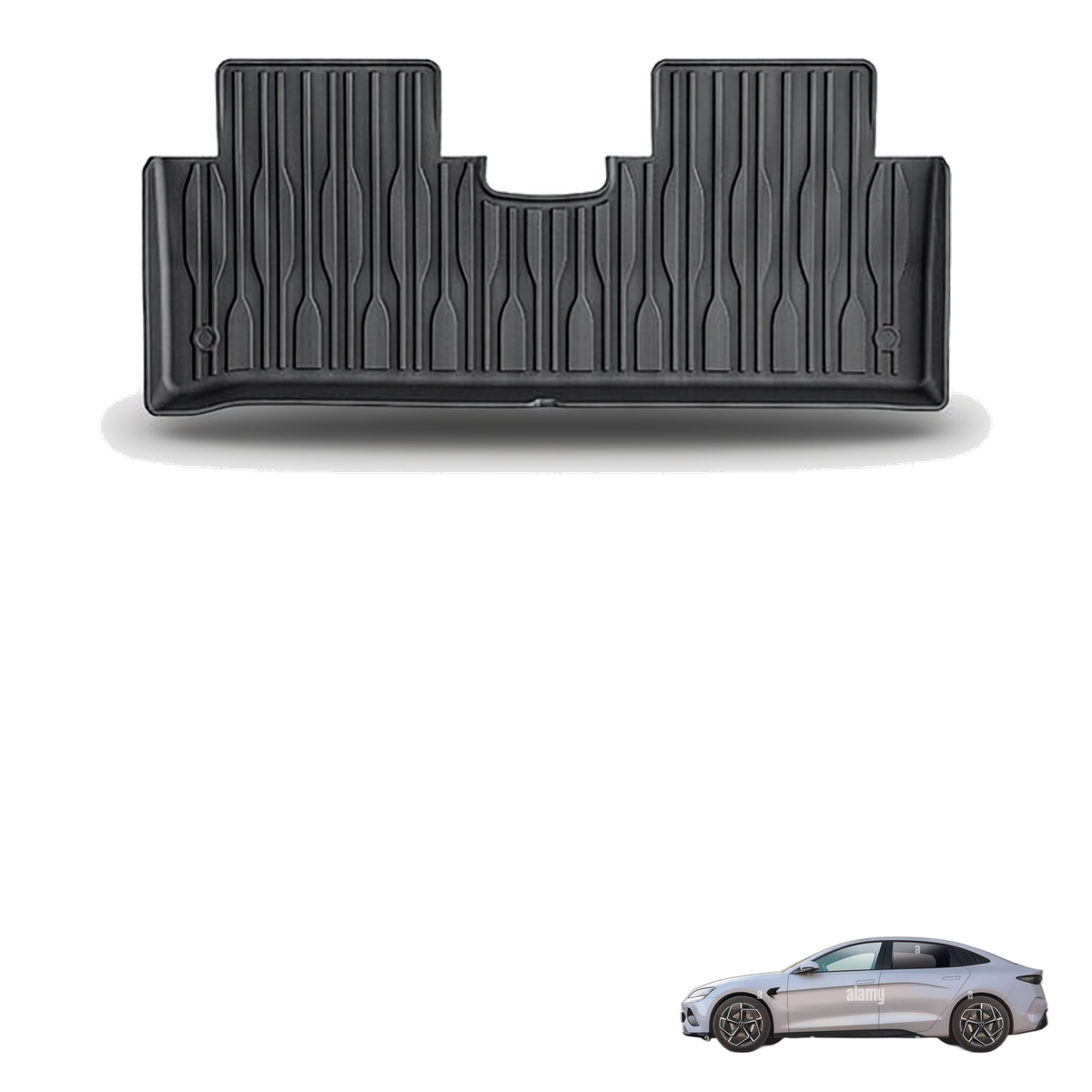
You cannot tell these three sets apart from product images. The differences are in the order of centimetres, spread around a perimeter, and no photograph taken at a normal angle will show them. This is worth saying plainly because it is the most common way people get it wrong: they compare pictures, decide the sets look identical, and buy on price or availability.
The listing year is the only reliable information. Trust it over what your eyes tell you about the photo.
What the sets have in common
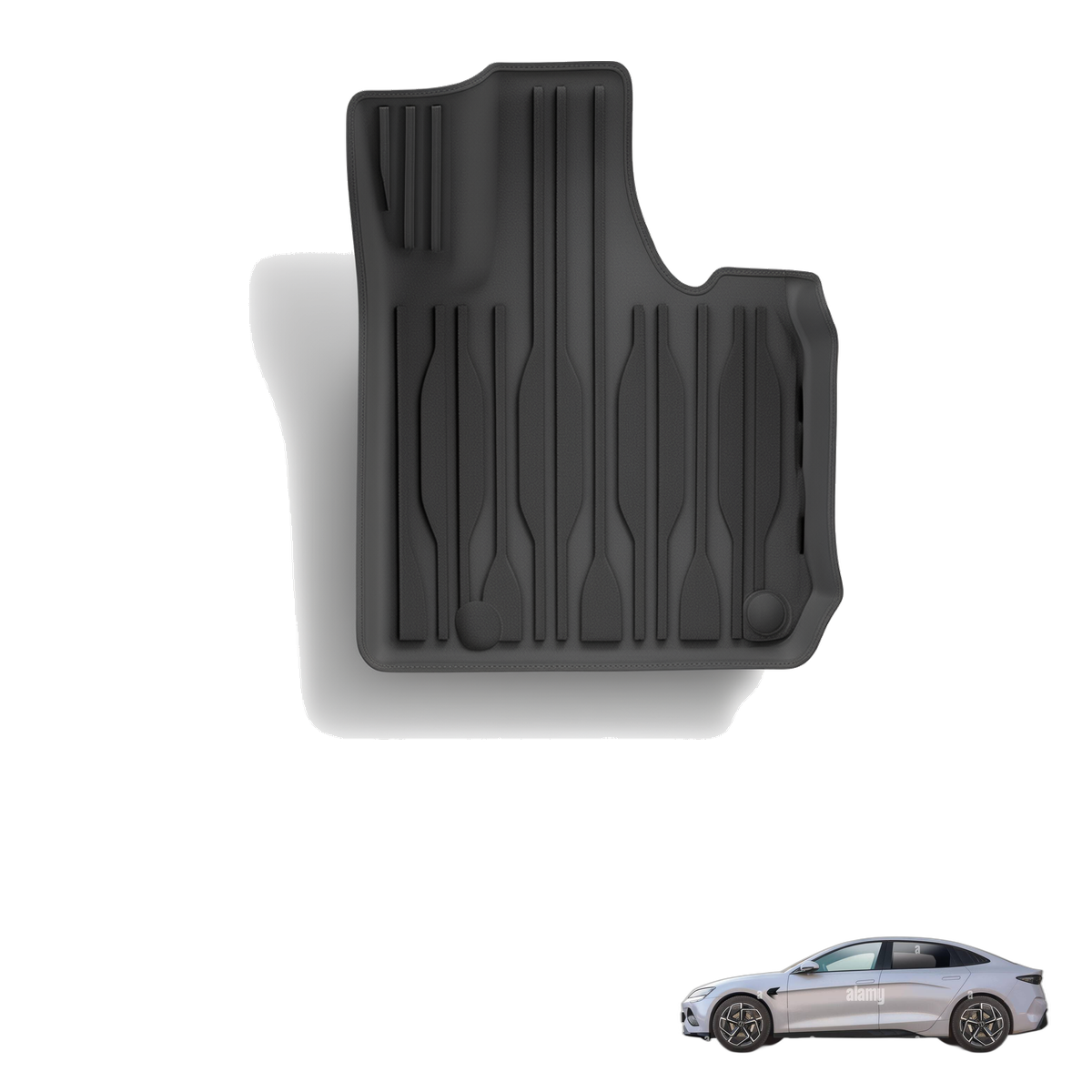
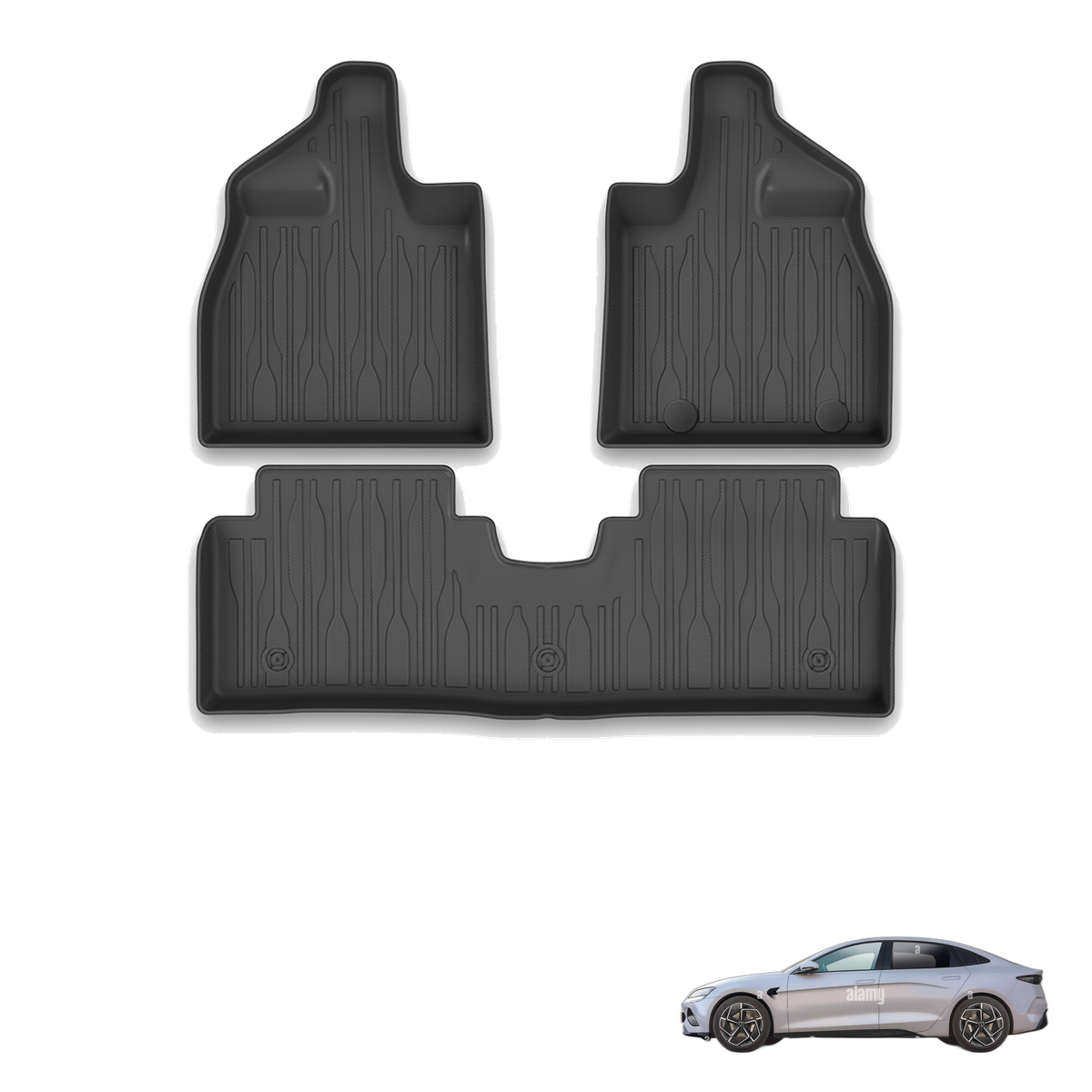
All three are all-weather mats: a waterproof moulded tray with raised edges, covering the front footwells and the second row. Water, sand and spills stay in the tray. When it gets bad, the mats lift out and hose down.
Construction is the same across the three, so the choice between them is purely about build year — there is no better or worse version, just the one that fits.
If you get it wrong
A mat from the wrong window causes three problems, in ascending order of seriousness. It leaves original carpet exposed near the sill and around the seat rails, which is the carpet you bought the mat to protect. It collects grit in the gap, which then grinds against the carpet edge. And it has room to travel, which around a pedal box is a safety issue rather than an annoyance.
If a set has already been fitted and moves when you push it with your foot, treat that as a fitment problem rather than something to live with.
Where to start
Find the build year, then buy the matching set. That is genuinely the whole decision for this car — there is no material choice to agonise over, no left- or right-hand-drive variant to pick between within a set.
The full range for this car is on the BYD Seal Family page. Other BYD models are covered under BYD, including the Sealion Family, the Dolphin and the Atto Family.
Wondering what all-weather actually means in construction terms? See TPE, XPE or carpet. Once the set is fitted, how to clean it without wrecking it is the one other thing worth reading.